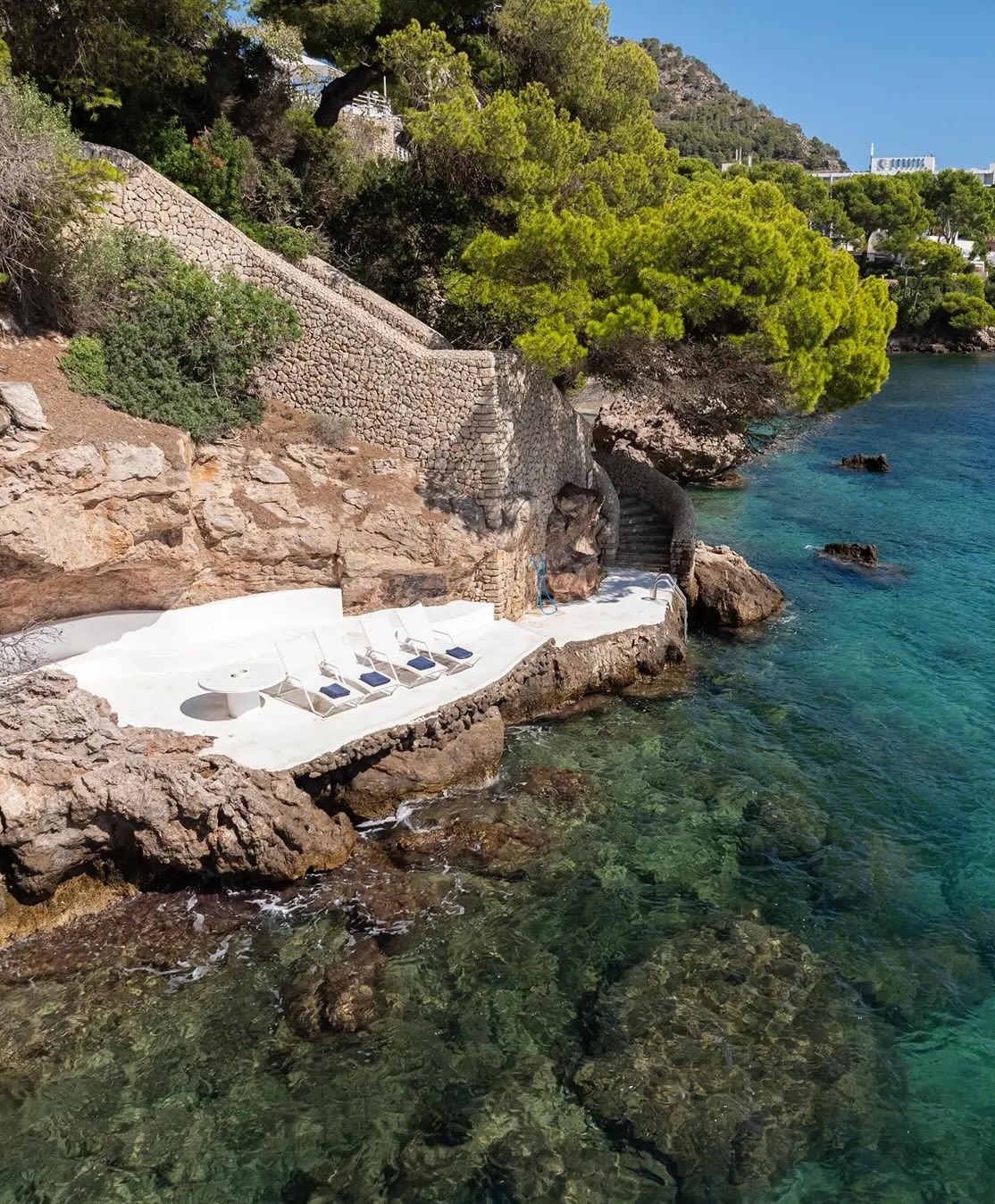
The view is unobstructed. The sound of waves is your soundtrack. Your villa sits metres from the sand, and it is for sale. The price is high, but the location is worth it. Then, before signing, your lawyer mentions something called the Ley de Costas, and suddenly the dream becomes more complicated. Spain’s Coastal Law is not new, but it is widely misunderstood, and it creates real restrictions on what you can do with beachfront property that American, British, and other expatriate buyers do not expect. Understanding the Ley de Costas is essential before buying any villa in first line of beach, because getting it wrong can cost you dearly.
The Fundamental Principle: The Coast Is Public
At the heart of the Ley de Costas, Spain’s 1988 Coastal Law, is a constitutional principle: the sea, the beaches, and the maritime-terrestrial domain are public goods that belong to the state and must remain accessible to all Spaniards and visitors. Your property may be private, but the coastline itself is not. The law exists to prevent the privatization of Spain’s shores, a concern born from decades of unchecked development that left the Spanish coast degraded and inaccessible.
This means that even if you own a villa on the beach, you do not own the beach. Strangers have the legal right to walk on the sand in front of your property, to access the water, and to use the coastline. Your ownership ends where the public domain begins, and that boundary is defined not by your property line but by a legal line called the deslinde.
The Zones: Understanding Where Your Villa Sits
The Ley de Costas divides the coastal region into three distinct zones, each with different rights and restrictions.
The Maritime-Terrestrial Domain (DPMT)
The first zone is the dominio público marítimo-terrestre (DPMT), the maritime-terrestrial domain. This includes the sea itself, the beach, the dunes, cliffs, salt marshes, and a band of land measured from the “inner edge of the shoreline.” This is entirely public property. You cannot own it. Period. No villa sits within the DPMT, at least not legally. However, homes that were built before the deslinde was established and that were later found to fall within the DPMT can remain occupied under a special regime, but they are not your property; they are a granted concession, typically for 75 years, which can be renewed.
The Protection Easement (Servidumbre de Protección)
The second zone is the protection easement, a band of privately owned land immediately inland from the DPMT, typically 100 metres wide (reduced to 20 metres in built-up urban areas). Your beachfront villa is most likely in this zone.
Here is the critical point: you own the land, but the law imposes severe restrictions on what you can do with it.
The restrictions are stark. You cannot build anything new on this land, not even a garage, a garden house, or a swimming pool that extends beyond certain limits. If a building already existed on the property when the Ley de Costas came into force in 1988, it can remain, but you are forbidden from enlarging it (increasing its volume, height, or floor area), from adding new structures, or even from significantly renovating it without permission from the coastal authorities.
What you can do is limited to repairs, maintenance, consolidation, and modernization that do not increase the size or height of the existing structure. These works can often be authorized through a simple written declaration (declaración responsable), but they must not alter the building’s footprint.
The rationale is clear: the administration wants to freeze the protection zone in its 1988 state, preventing further encroachment on the coast.
The Transit Easement (Servidumbre de Tránsito)
Running along the water’s edge is a 6-metre-wide strip called the transit easement (servidumbre de tránsito). This must remain permanently free and unobstructed, available for public access and for surveillance and rescue vehicles. If your villa sits on the protection easement and has a beach-level terrace or access point, that terrace or access cannot extend into the transit easement, or it must leave at least 3 metres clear (with 3 metres of headroom) for public passage.
The Influence Zone (Zona de Influencia)
Beyond the 100-metre protection easement is an additional 500-metre influence zone. Here, property is private and you can build, but urban planning rules require that any new development avoid “architectural screens” (dense high-rises that block the view to the coast from inland) and maintain a density consistent with surrounding areas. The rationale is to preserve views of the coast and prevent a wall of skyscrapers choking the shoreline.
The Deslinde: The Line That Changes Everything
The exact boundary between the DPMT and the protection easement is determined by an administrative process called the deslinde. This is not a quick survey; it is a careful investigation that examines maps, satellite data, historical records, and physical characteristics of the coast to determine where the shoreline legally stood at various points in history.
The deslinde is not fixed. The coastline moves naturally due to erosion, accretion, and storms. As it moves, the legal boundary moves with it. A property that is privately owned today might find itself within the DPMT after a deslinde revision, which means it would technically become public property (though existing buildings can remain under a concession regime).
For a buyer, the deslinde is critical. Before purchasing beachfront property, you must obtain the current deslinde for your specific location and verify that your villa is legally situated in private land (even if burdened with easements) and not within the DPMT itself. A property literally on the wrong side of the deslinde line can be subject to expropriation or have its use severely restricted.
What This Means for Buyers: The Hard Restrictions
If you are considering a beachfront villa in the protection easement, understand what you cannot do.
You cannot expand the building. Want an additional bedroom? Not without a costly and often-denied exception process. Want a larger terrace? Same problem.
You cannot build a guest house, studio, or separate structure. The easement is frozen.
You cannot demolish and rebuild. Even if the villa is old and you want to replace it with something new, you generally cannot. The law says demolition requires authorization and rebuilding would violate the freeze. Exceptions exist for buildings of exceptional cultural or historical value that are integrated into coastal heritage, but these are rare.
You cannot refuse public access. Strangers can walk past your property on the beach and, in some zones, may even have legal easement rights to cross your land to reach the beach.
You will face financing difficulty. Many banks are wary of mortgaging beachfront property burdened with coastal easements, viewing the restrictions as making the property riskier collateral. Some institutions may refuse to finance altogether.
Your insurance and maintenance costs are higher. Proximity to salt water, wind, and sand accelerates deterioration, and you will pay more in upkeep than for an equivalent villa inland.
Exceptions and Relief Provisions
The law is not entirely inflexible. Limited relief exists.
Buildings in the protection easement that existed before the deslinde and are properly legalized can be maintained, repaired, and even moderately modernized without enlargement. If you are buying an existing villa that pre-dates the law, confirm it is properly legalized and registered; if it is not, you face the risk of demolition orders.
Recent law reform proposals, not yet fully implemented, suggest offering limited relief for buildings of significant cultural or historical value in traditional coastal towns, allowing them to remain and be used but not expanded.
For works in the transit easement (the 6-metre public strip), exceptions can sometimes be granted if you can justify that they are necessary and can propose an alternative routing for public access. This is difficult to obtain but not impossible.
The Practical Checklist Before Buying
Before signing, demand and carefully review the following.
Obtain the current deslinde. Verify from the coastal authority that your villa is not within the DPMT. This must be clear and documented.
Request a coastal certificate. Ask the local coastal authority for an official certificate describing any easements affecting your property and their exact extent.
Check the property registry. Ensure that any easements are properly inscribed and that previous owners were able to maintain and legally use the property.
Verify legalization. Confirm that the villa was legally constructed under the law in force at the time and that any renovations or repairs were properly authorized or declared.
Get a lawyer’s opinion. Before making any offer, have a Spanish real estate lawyer experienced in coastal property review the property’s situation. The cost is modest relative to the risk.
Understand financing obstacles. Contact lenders early to confirm they will finance the property. Some will refuse; others will demand a higher down payment or charge a premium rate. Plan accordingly.
Survey the exact location. If possible, visit and physically walk the property and the beach. Understand where the public zone begins and your private space ends. Observe erosion patterns, wave action, and sand movement.
The Upside: Why People Still Buy Beachfront
Despite these restrictions, beachfront villas in Spain remain sought-after and valuable. The reason is simple: you cannot create more beaches, and a villa metres from the sea commands a premium that often outweighs the restrictions.
If you use the property as a personal residence (rather than seeking to expand or develop it), the restrictions bite less. You inherit a defined property with defined limits, and as long as you respect them, you can enjoy the location, the views, and the lifestyle. Many buyers accept this trade-off.
Properties in less stringent zones—built-up urban areas where the protection easement is only 20 metres wide, or properties just outside the easement in the 500-metre influence zone—offer more flexibility while retaining beach proximity and value.
The Bottom Line
The Ley de Costas is not a trap; it is a framework. Understanding it before you buy is the difference between a sound purchase and an expensive surprise. The law exists to protect Spain’s coast for all Spaniards and visitors, and as a property owner, you must respect that priority. But within its constraints, beachfront property in Spain remains a legitimate and often rewarding acquisition, provided you know what you are buying and what you are giving up.
This article is for general informational purposes only and does not constitute legal or real estate advice. The Ley de Costas is complex, and its application varies by location, deslinde status, and individual circumstances. Before purchasing any coastal property in Spain, consult a qualified Spanish real estate lawyer and request official documentation from the relevant coastal authority.
Leave a Reply