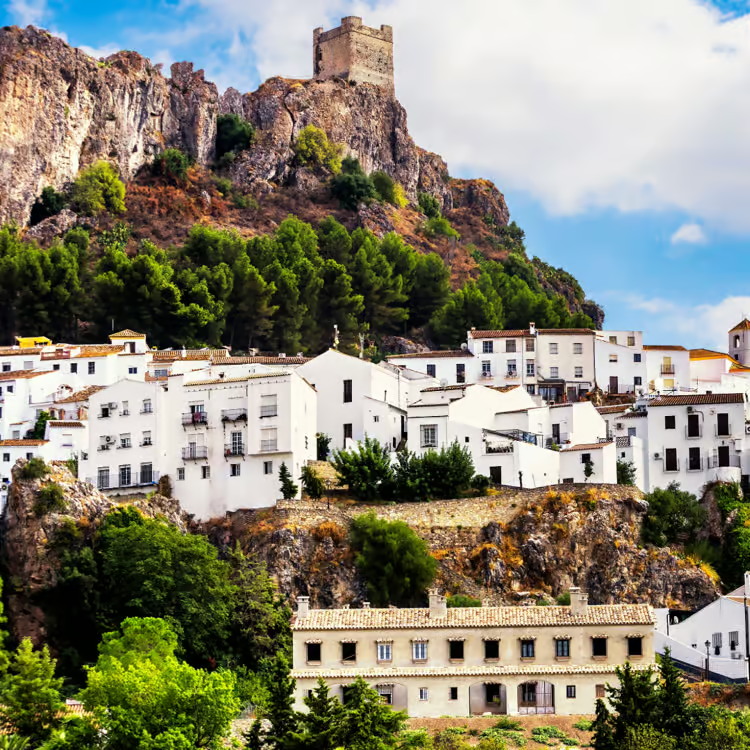
The beaches of Marbella and the Costa del Sol are no longer the exclusive domain of wealth in Spain. A growing number of high-net-worth expatriates and Spanish elites are discovering something more rewarding than a beachfront villa: a sprawling cortijo (traditional farmhouse) set on rolling olive-grove estates in the mountains of Andalusia, or a carefully restored Renaissance palace in a UNESCO-listed white village where locals still speak Castilian Spanish and tourists are a rarity. Inland Spain offers what the coast cannot: privacy, space, equestrian lifestyle, authentic culture, and property that appreciates steadily without the seasonal tourism chaos. This guide explores the most exclusive interior destinations for luxury living in Spain.
The Equestrian Culture: Where Horses Define Lifestyle
Spain’s interior, particularly Andalusia, has a centuries-old equestrian tradition rooted in the conquest, the Spanish Riding School, and a deep cultural connection to horsemanship. For wealthy equestrian enthusiasts and polo aficionados, inland Andalusia is not just a destination; it is a lifestyle ecosystem.
Jerez de la Frontera remains the epicentre of classical Spanish horsemanship. The Real Escuela Andaluz de Arte Ecuestre (Royal Andalusian School of Equestrian Art) is housed here, producing some of the world’s finest dressage and classical riding competitors. Equestrian estates around Jerez come with professional training facilities, stables for 10–50+ horses, and access to world-class instruction. Property prices range from €800,000 for a modest estate to €5 million+ for a grand hacienda with multiple guest houses, Olympic-standard arenas, and commercial equestrian business potential.
Sotogrande (technically near the coast in Cádiz but distinctly inland in character) has positioned itself as an international polo destination. The Sotogrande polo clubs attract world-class players and tournaments. Equestrian estates here blend modern facilities with traditional Andalusian architecture. A luxury polo estate with a private polo pitch, guest accommodations, and premium stables can range from €2.5 million to €8 million+.
The Serranía de Ronda, the mountain range surrounding the white town of Ronda, has emerged as a hotspot for equestrian estates in recent years. Properties here emphasize natural beauty, privacy, and expansive acreage. A typical luxury cortijo in this region sits on 5–30 hectares, features 4–6 bedrooms, professional stabling for 10–20 horses, and commanding views of the mountains. Prices range from €1.2 million to €4 million, significantly cheaper than coastal equivalents for comparable acreage and facilities.
The Historic Villages: Living in the Past, With Modern Comforts
For those seeking authentic culture and architectural heritage rather than equestrian facilities, Spain’s interior white villages and historic towns offer unparalleled opportunities.
Ronda (Málaga Province) is arguably the most famous—perched dramatically on a gorge, with the iconic Puente Nuevo (New Bridge) spanning a 120-metre chasm. The town has avoided overdevelopment and remains deeply Spanish. Property prices in the town centre average €400,000–€800,000 for a restored townhouse (casa), often with terraces overlooking the gorge. Larger estates in the surrounding Llano del Cruz valley cost €1–€3 million. The draw is both the architectural heritage and the proximity to nature: Los Alcornocales National Park, excellent hiking, and a thriving expat community of artists, writers, and retirees who value solitude and culture over parties.
Antequera (Málaga Province), a UNESCO-listed town, is less touristic than Ronda but architecturally richer. It features stunning Renaissance churches, a 16th-century fortress, and a compact historic centre where every corner reveals carved doorways and hidden plazas. Property here is 15–20% cheaper than Ronda; a restored townhouse costs €250,000–€500,000. The nearby El Torcal National Park offers dramatic limestone rock formations and hiking. Antequera is quieter, more authentically Spanish, and increasingly attractive to expats seeking the “real” Spain.
Úbeda and Baeza (Jaén Province, in central Andalusia) form a UNESCO World Heritage site together, recognized for their exceptional concentration of 16th-century Renaissance architecture designed by the master architect Andrés de Vandelvira. These towns barely register on the international tourism radar, making them ideal for those who value authenticity and privacy. Property is remarkably affordable: a restored Renaissance palace or large townhouse costs €150,000–€400,000. The towns have excellent restaurants, cultural events, and a strong local community. Major expat populations are minimal, which appeals to purists seeking immersion in Spanish culture.
Gaucín (Málaga Province), perched at 627 metres in the hills between Ronda and the coast, offers a middle ground: mountain village charm without Ronda’s fame. A whitewashed pueblo with wandering streets, local farmers markets, and sweeping views toward Gibraltar and the Atlas Mountains. Property averages €300,000–€800,000. The expat community is small but established; the village feels authentically Spanish while offering basic English-speaking services.
The Economics: Why Interior Property Is a Smarter Investment
Coastal property in Spain—particularly on the Costa del Sol—has stalled. Marbella villas that sold for €5 million in 2015 languish at €4 million in 2026. Interest rates have risen, international demand has softened, and the market is saturated with stock.
Interior property, by contrast, is appreciating. Several factors drive this:
Demographic shift: Remote work, digital nomadism, and a post-pandemic revaluation of lifestyle have made interior locations—with space, nature, and lower costs—increasingly desirable. Expats are discovering that €1.5 million buys a 20-hectare equestrian estate with guest houses and professional stables inland; the same budget buys a modest villa 5 kilometres from Marbella town.
Authenticity premium: As coastal areas become homogenized with British pubs and international chain restaurants, the “real Spain” commands a growing premium among discerning buyers. Properties in historic villages with genuine Andalusian character and minimal tourism have outpaced coastal appreciation over the past five years.
Commercial potential: Many interior estates can be licensed for rural tourism (casas rurales), equestrian schools, wedding venues, or polo operations, generating income. A €2 million equestrian estate near Ronda can produce €60,000–€100,000 annually in managed guest accommodation or lesson revenue—income impossible to generate from a beachfront villa.
Tax efficiency: Rural properties with agricultural activity (olive groves, horse breeding, vineyard) may qualify for preferential tax treatment under Spain’s rural investment incentives, though professional advice is essential.
The Lifestyle: What Inland Living Actually Involves
Isolation and self-sufficiency: Interior villages can be remote. Winter roads may be challenging; internet is improving but not always fibre-grade. Groceries require planning. Medical facilities are regional, not immediate. This appeals to those seeking solitude but demands resilience.
Community and culture: Inland towns have tight-knit communities where locals know everyone. For expats, integration takes time and intentionality, but the reward is genuine friendship and cultural immersion. Regular fiestas, local restaurants, and shared values create belonging unavailable in transient coastal areas.
Cost of living: Interior living is 25–40% cheaper than coastal equivalents. Lunch menus in local restaurants cost €12–€18 versus €25–€40 on the coast. Staff (housekeepers, groundskeepers) earn regional wages, not tourism-inflated rates.
Seasonal rhythm: Unlike the coast, where summer tourism dominates, interior regions follow agricultural and local rhythms. Spring and autumn are lively; winter is quiet and genuine. There is no “season,” only the slow Spanish year.
Practical Considerations: Buying Inland
Legal structure: Like all Spanish property purchases, you need a NIE (foreigner’s tax identification number), a Spanish bank account, and a gestoría (tax and legal administration firm) familiar with rural property. Hiring a Spanish real estate lawyer experienced in rural transactions is non-negotiable.
Utilities and infrastructure: Equestrian estates require reliable water, electricity, and (ideally) fibre internet. Many older cortijos rely on wells, septic systems, and generators. Budget €50,000–€150,000 for modern infrastructure upgrades.
Building permits and planning: Restoring or expanding a historic property in a protected village requires permission from local heritage authorities. Timelines can extend 12–24 months. Budget accordingly.
Residency: Buying property does not grant residency. You will need a visa (Digital Nomad Visa, Non-Lucrative Visa, or Golden Visa). Plan your residency status independently of property purchase.
Professional advice: The interior market is less transparent than coastal markets. Work with an experienced rural real estate agent and lawyer. Property prices can vary 20–30% based on hidden factors (water rights, access, heritage restrictions) invisible to outsiders.
Sample Properties: What €2 Million Buys
Cortijo near Ronda: 18 hectares, 5-bedroom main house (400 m²), guest cottage (100 m²), professional stables for 12 horses, dressage arena, olive grove, mountain views. Estimated price: €1.8–€2.2 million.
Renaissance palace, Úbeda: 700 m² across three floors, 8 bedrooms, two interior patios, original wooden beams and stone arches, located in UNESCO-listed centre. Estimated price: €400,000–€600,000.
Polo estate, Sotogrande: 12 hectares, 6-bedroom villa, private polo pitch, guest lodge, stables for 20 horses, professional training facilities, clubhouse with bar and viewing area. Estimated price: €3.5–€5 million.
Hacienda near Jerez: 35 hectares, historic main house (600 m²), two guest houses, Olympic-standard dressage arena, round pen, professional facilities for breeding or training operation. Estimated price: €2.5–€4 million.
The Bottom Line: Who Should Buy Inland?
Interior Spain is not for everyone. It suits those who:
- Prioritize space, privacy, and nature over proximity to shopping and nightlife.
- Have a genuine interest in equestrian pursuits, history, or Spanish culture.
- Are prepared for solitude and small-town rhythms.
- View property as a long-term investment and lifestyle, not a short-term trading vehicle.
- Have the means to maintain and upgrade aging properties.
- Seek authenticity and are willing to invest time in community integration.
For those who check these boxes, an equestrian estate in the Serranía de Ronda, a Renaissance palace in Úbeda, or a sprawling hacienda near Jerez offers something no beachfront villa can: a complete life, rooted in genuine Spanish culture, with space, privacy, and appreciating asset value.
This article is for general informational purposes only and does not constitute real estate, legal, or investment advice. Spanish property law, heritage regulations, and tax treatment of rural properties are complex and vary by location and individual circumstances. Before purchasing, consult a qualified Spanish real estate lawyer, a gestoría (tax administrator), and an experienced rural property agent. Property prices, availability, and regulations change; the examples provided are illustrative and based on 2026 market data.
Leave a Reply