
Most relocation guides cover visas, housing, and schools. Almost none address what happens to the things that make a house feel like home: the art collection, the car you don’t want to sell, and the pet who is non-negotiable family. These three categories sit in completely different parts of Spanish and EU law, customs, veterinary regulation, and vehicle registration, and getting any one of them wrong is expensive. This guide walks through all three, with the specific 2026 rules for each.
Part 1: Moving Pets to Spain
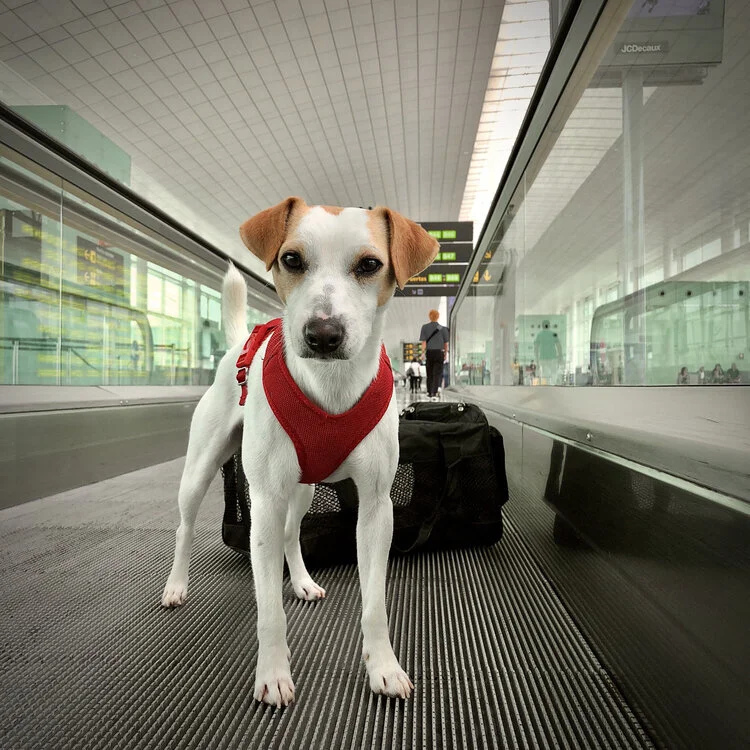
Spain remains one of Europe’s most pet-friendly relocation destinations, but the paperwork must be sequenced exactly right. Most problems are not about missing vaccines; they are about timing and document format.
The Three Non-Negotiables
Every dog, cat, or ferret entering Spain needs three things, in this order: an ISO 11784/11785-compliant microchip, a rabies vaccination administered after that microchip is implanted, and the correct travel document for your situation.
Get the sequence wrong and the consequences are real. If the rabies shot was given before the microchip, or before the chip was scanned, it generally does not count and must be repeated. A first-ever (“primary”) rabies vaccination requires a mandatory 21-day wait before travel; a booster given before the previous dose expires has no such wait, but you must carry proof there was no lapse in coverage.
Which Document You Need
If your pet is resident in the EU, an EU Pet Passport issued by an authorized vet is sufficient and lasts the animal’s lifetime as long as vaccinations stay current. If you are arriving from a non-EU country, including the United States, Canada, and post-Brexit the United Kingdom, you need an Animal Health Certificate (AHC) instead, issued by an accredited vet and, for US travelers, endorsed by USDA-APHIS. The AHC must be issued within 10 days of entering Spain, and that window is unforgiving: a certificate issued on day one of an 11-day trip is already invalid on arrival.
UK pet owners face a specific trap. Since Brexit, the old EU Pet Passport no longer works for travel into the EU; British owners need the same Animal Health Certificate as any other non-EU traveler, not their former passport.
Special Cases Worth Knowing
Spain places no nationwide ban on specific breeds, but it does classify certain dogs as Perros Potencialmente Peligrosos (PPP), a list that typically includes Pit Bull Terriers, Staffordshire Bull Terriers, Rottweilers, and Dogo Argentinos. Importing one is no harder than any other dog, but living with one in Spain is: owners must obtain a municipal license requiring a clean criminal record, a psychological aptitude test, specific liability insurance, and a commitment to muzzle the dog and use a non-extendable lead under two metres in public.
Travel is capped at five pets per person under non-commercial rules, and entry must happen through a designated Traveller’s Point of Entry, where officials may inspect documents. No quarantine applies if everything is in order, and Spain, unlike Finland, Ireland, Malta, or Norway, does not require tapeworm treatment before arrival.
Practical Timeline and Cost
Specialists consistently recommend starting eight to twelve weeks before travel, enough time for a primary vaccination’s 21-day wait, certificate issuance, and any airline booking for cargo transport. Realistic relocation costs run from around €300 for a straightforward in-cabin trip to €3,000 or more for a large dog travelling as manifest cargo with a specialist pet-relocation service. Note also that the EU’s April 2026 update consolidating non-commercial pet movements into a single legal act is in a transition period through March 2027, so always check current detail against the official EU and Spanish veterinary sources before you travel.
[Suggested internal link: in this section, “Digital Nomad Visa” or general visa context could link to an existing visa-focused article, since many pet relocations happen alongside a visa move.]
Part 2: Importing a High-End Vehicle to Spain
This is the category where good advice saves thousands of euros, and bad advice (or none) can cost a car its registration entirely.
The Single Most Important Concept: Transfer of Residence
Spain’s vehicle registration tax, the Impuesto Especial sobre Determinados Medios de Transporte (IEDMT), is a CO2-based tax that can run into thousands of euros on a high-emission vehicle. But under Article 66(1)(n) of Law 38/1992, a vehicle brought in as part of a genuine traslado de residencia (transfer of habitual residence) can be fully exempt from this tax, and from import duty and VAT, if specific conditions are met.
To qualify, you generally need to show you lived outside Spain for at least 12 consecutive months before the move, that you owned and used the vehicle for at least 6 months before relocating, and that the vehicle is registered in your name in the country of origin. Crucially, the customs declaration (DUA) must be filed explicitly as a transfer-of-residence import, not a standard import. File it the wrong way, even by accident, and the tax exemption is gone permanently, no matter what you do afterward.
There is a strict procedural deadline too: you must register the vehicle in Spain within 60 days of first use here under the residence-transfer exemption (versus 30 days for an ordinary import), and the underlying customs relief application generally must be made within 12 months of establishing Spanish residence.
What Happens If You Don’t Qualify
Vehicles imported from outside the EU without residence-transfer relief face a considerably harsher bill: roughly 10% customs duty plus 21% VAT on the vehicle’s value, on top of the CO2-based IEDMT itself. One often-cited case involved a Swiss-plated Mercedes that would have cost more than €12,000 in combined customs and registration tax without the exemption, a bill so large the owner chose to send the car back rather than pay it.
There is a narrower relief for EU-manufactured vehicles, even when shipped from outside the EU: a EUR.1 certificate of origin can eliminate the 10% customs duty (though not VAT or IEDMT) if the exporting country has a relevant trade agreement with the EU.
The Technical Hurdle: Homologation
Tax exemption does not guarantee you can actually put the car on Spanish roads. Vehicles need EU type-approval (a Certificate of Conformity, or COC) to pass the mandatory ITV roadworthiness inspection. American-market and other non-EU-spec vehicles often lack this, and without it, registration can require individual technical approval, an expensive and sometimes impossible process for cars that were never built to EU standards. For a transfer-of-residence import specifically, the bar is somewhat lower, a basic technical data document can sometimes substitute for full EU homologation, but this should be confirmed with a specialist before the car ships, not after.
A few other figures worth budgeting for: international vehicle transport typically runs €1,000 to €2,500 from a country such as Germany, and the flat traffic fee (Tasa de Tráfico) for registration sits at €99.77 in 2026. You also cannot legally drive a foreign-plated car in Spain for more than 183 days as a resident, so the registration process is not optional once you have settled in.
Part 3: Bringing Fine Art to Spain
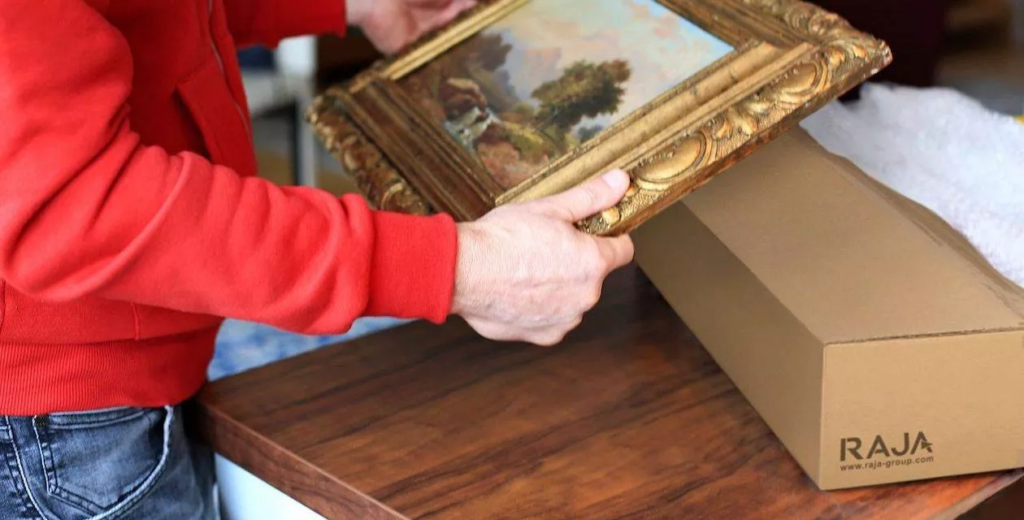
Art is, in one specific sense, the easiest of the three categories: original works of art, antiques, and collector’s items are generally exempt from customs duty when entering the EU, regardless of origin country. That said, two other layers still apply.
Import VAT Still Applies
Even though customs duty is waived, import VAT is not automatically waived unless the personal-effects exemption applies. Spain’s standard import VAT is 21%, though art, antiques, and collectors’ items can in some cases benefit from a reduced VAT base under EU rules, a detail worth confirming with a customs specialist for high-value pieces, since the difference on a substantial collection is significant.
If the art genuinely qualifies as part of a transfer of habitual residence, the same personal-effects relief that covers furniture and household goods can extend to artwork you have owned and used for at least six months, declared within the same DUA process described for vehicles, with VAT and customs duty both waived. This is the route most relocating collectors should pursue rather than a standard commercial import declaration.
Cultural Property and Age Thresholds
Two additional checks matter for serious collections. First, EU rules impose mandatory import licensing requirements for cultural goods over roughly 250 years old, regardless of declared value, a process that needs advance planning and should never be left until the shipment is already in transit. Second, if a piece involves protected materials, ivory, certain woods, or specimens covered by the Convention on International Trade in Endangered Species (CITES), Spain requires the original export permit from the country of origin to be presented to Spanish customs (or one of the SOIVRE inspection services) before clearance, alongside the relevant CITES import documentation.
A Notable Spanish Incentive
Spain offers something most countries do not: importers who have a qualifying piece included in the General Inventory of Personal Property, or declared an Asset of Cultural Interest, can claim a tax deduction of 15% of the acquisition or import cost, provided the piece remains in Spain and in the owner’s possession for at least four years. The declaration must be requested from the Ministry of Culture’s relevant department within three months of import. For a significant collection, this is worth structuring for deliberately rather than discovering after the fact.
Practicalities
Specialist fine-art shippers (climate-controlled transport, professional crating, transit insurance at full value) are strongly advisable for anything beyond decorative pieces; the cost is modest relative to the value being protected. Keep comprehensive documentation, provenance records, prior insurance valuations, and purchase invoices, both to support any transfer-of-residence claim and because Spanish customs can request proof of value and origin at any point during the import process.
Bringing It All Together
The common thread across pets, vehicles, and art is that Spain offers genuine, valuable exemptions, customs-free pet entry with the right paperwork, full tax relief on a vehicle under transfer of residence, and duty-free, often VAT-relieved treatment of art and personal effects, but every one of them depends on sequencing and documentation done correctly the first time. A vehicle declared as a standard import cannot retroactively become a residence-transfer exemption. A pet vaccinated in the wrong order may need to start its waiting period over. An art import without an export licence for a protected species can be seized at the border.
The practical advice that applies across all three: start early (eight to twelve weeks for pets, longer for a vehicle if homologation is uncertain), use specialists for anything valuable or complex (pet relocation services, vehicle import consultants, fine-art shippers), and get every customs declaration filed under the correct legal basis from day one. Done properly, your collection, your car, and your companion animal can all make the move to Spain as smoothly as you do.
This article is for general informational purposes only and does not constitute legal, customs, veterinary, or tax advice. Requirements for pet travel, vehicle import, and the importation of art and cultural goods change frequently and depend on your specific country of origin, nationality, and circumstances. Before relocating, verify current requirements with Spanish customs (Agencia Tributaria), the relevant veterinary authority, and a qualified import or customs specialist.
Leave a Reply