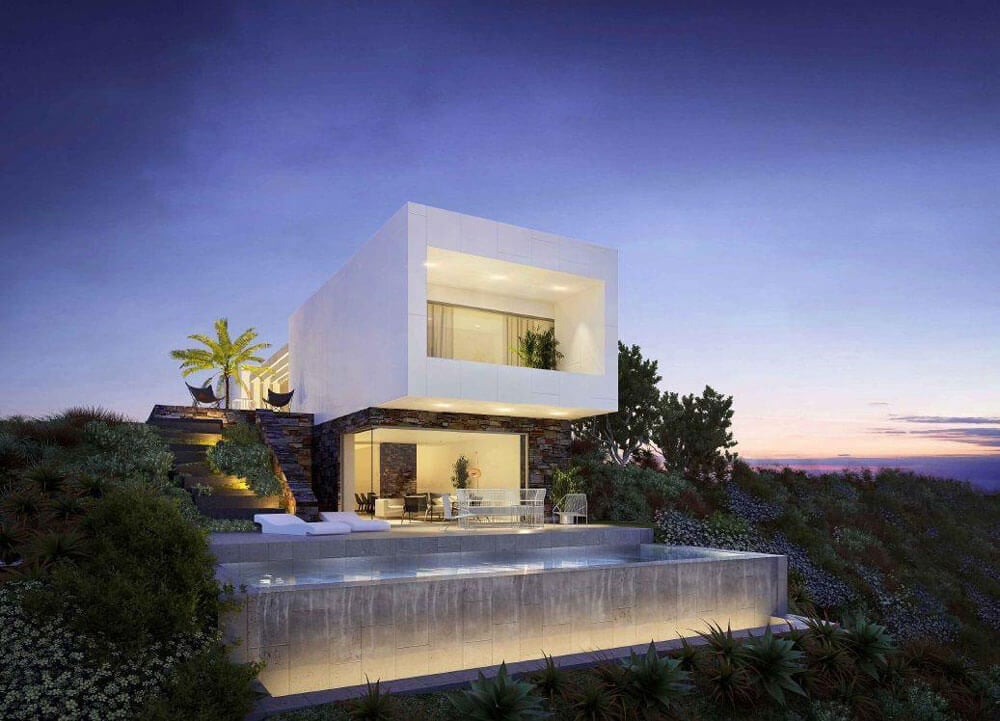
A decade ago, luxury real estate in Spain meant marble, square footage, and an infinity pool. In 2026, that definition has fundamentally changed. The Knight Frank Next Gen Survey found that 75% of ultra-high-net-worth individuals are now actively seeking to reduce their carbon footprint when buying property, and Berkshire Hathaway HomeServices’ Global Luxury Landscape Report found 81% of high-spending buyers willing to explore housing types that reflect sustainability and wellness values. Nowhere is this shift more visible than among Nordic buyers purchasing in Spain, a demographic for whom energy performance, water efficiency, and genuine environmental credentials are not marketing flourishes but baseline expectations carried over from some of the world’s strictest building standards. This guide explains what eco-luxury actually means in the Spanish market, which features genuinely matter, and where this trend is concentrated.
Why Nordic Buyers Are Driving This Shift
Buyers from Sweden, Norway, Denmark, and Finland arrive in the Spanish market with expectations shaped by decades of stringent domestic building codes, some of the most advanced in the world for energy performance and indoor air quality. For this buyer profile, a villa’s environmental credentials are not an emotional add-on; they are a baseline technical expectation, the same way a Nordic buyer would expect proper insulation as a given, not a premium feature, in their home market.
This expectation has collided productively with Spain’s own regulatory direction. By 2026, energy efficiency has stopped being a “nice-to-have” feature in the Spanish luxury market and has become a primary driver of value. With EU regulations tightening and climate-conscious buyers increasingly setting the tone, properties with high Energy Performance Certificate (EPC) ratings (A or B) command a significant price premium, while older, energy-inefficient villas are sitting on the market longer, often requiring price reductions to account for the renovation investment a buyer will need to make to bring them up to modern standards.
The market has responded directly: properties built to Passive House standards, or equipped with solar integration, aerothermal systems, and water recycling, are increasingly selling off-plan in record time, a clear signal that demand for these features now outpaces supply in Spain’s premium segment.
What “Eco-Luxury” Actually Means: Beyond the Marketing
The term sustainable luxury has become heavily used in real estate marketing, and discerning buyers, particularly the technically literate Nordic demographic, are increasingly skeptical of vague “green” claims that do not translate into measurable, verifiable performance. Understanding the substantive features behind credible eco-luxury construction matters for anyone evaluating the market, whether as a buyer or simply trying to understand what is driving prices.
Passive House (Passivhaus) Standards
Genuine Passive House construction is the gold standard underpinning credible eco-luxury claims. These residences achieve dramatic reductions in energy consumption, often by up to 70% compared to conventional construction, through superior insulation, strategic orientation for sunlight absorption and heat retention, triple-glazed windows, and carefully engineered airtightness combined with controlled ventilation. The result is a home that maintains comfortable temperatures year-round with minimal mechanical heating or cooling input, while still delivering the large windows, high ceilings, and open-plan brightness that luxury buyers expect.
Energy Systems
Solar integration has moved from an optional add-on to a near-standard feature in new luxury developments along the Costa del Sol and beyond. Beyond rooftop photovoltaics, leading projects increasingly incorporate geothermal heating and aerothermal systems (which extract ambient heat from air or ground to efficiently heat and cool the home), predictive energy management systems that anticipate and optimize consumption patterns, and battery storage to maximize self-generated power use rather than exporting it back to the grid.
Water Management: Critical in Spain’s Climate
Water efficiency carries particular weight in southern Spain’s semi-arid climate, where water scarcity is a genuine, ongoing concern rather than an abstract sustainability talking point. Leading eco-luxury villas now routinely incorporate drought-resistant, native landscaping paired with smart drip irrigation systems using soil sensors that adjust water output based on real-time conditions; greywater recycling systems that reuse water from sinks and showers for irrigation and toilet flushing; rainwater harvesting where local regulations permit; and energy-efficient pool filtration and heating systems. These systems deliver genuine reductions in both environmental impact and ongoing operating costs, a combination that resonates strongly with buyers thinking in terms of long-term value rather than purely upfront aesthetics.
Materials and Construction
Credible eco-luxury construction extends to material sourcing: recycled stone, insulated concrete forms, natural lime render, certified sustainable timber, and locally quarried materials that reduce both embodied carbon and the environmental cost of transportation. Some developments use straw bale construction or other natural materials specifically for their exceptional thermal and acoustic insulation properties, demonstrating that ecological responsibility and refined design are not in tension.
Indoor Environment and Biophilic Design
Beyond energy and water, sophisticated eco-luxury design increasingly incorporates biophilic principles: design that deliberately strengthens occupants’ connection to natural light, ventilation, and surrounding landscape. This includes low-VOC finishes and materials that support genuinely healthy indoor air quality, natural ventilation strategies that reduce dependence on mechanical air conditioning, and architectural orientation that frames views and daylight as core design elements rather than incidental benefits.
Smart Home Automation
Technology has become deeply integrated into the eco-luxury proposition, not as a separate gadget layer but as the operational backbone that makes genuine efficiency possible. Centralized control systems now manage entire properties, from climate and lighting to security and energy distribution, learning owner preferences and adjusting consumption automatically. Demand for these fully integrated “tech villas” has grown substantially in the Costa del Sol’s luxury market in recent years, driven specifically by buyers, including technology executives, who prioritize both comfort and measurable energy efficiency. Properties in the €15–20 million range incorporating this level of integrated automation are reportedly selling within months, reflecting a genuine shortage of ultra-prime supply matching this specification.
Certification: Separating Substance from Marketing
Given widespread skepticism toward vague sustainability claims, credible third-party certifications have become an important trust signal for serious buyers. The most relevant standards in the Spanish luxury market include Passivhaus certification (verifying genuine passive energy performance), BREEAM (a comprehensive sustainability assessment covering energy, water, materials, and broader environmental impact), and WELL certification (focused specifically on occupant health and wellbeing within the built environment). For Nordic buyers accustomed to rigorous domestic standards, the presence of recognized certification, rather than developer assurances alone, is often a decisive factor in distinguishing genuine eco-luxury construction from marketing language layered onto conventional building.
These certifications carry practical financial weight beyond buyer preference: they reduce both buyer and lender risk perception, supporting easier mortgage approval and potentially more favourable financing terms, since lenders increasingly view verified energy performance as a factor in long-term asset value and resale liquidity.
Where This Trend Is Concentrated
Marbella and the Costa del Sol remain the epicentre of Spain’s eco-luxury movement. Specific developments illustrate the range of approaches: hillside villas in El Madroñal incorporating solar systems, geothermal heating, rainwater collection, and indoor air quality monitoring; modernist beachfront homes along Málaga’s East Beachfront Corridor featuring smart glass and predictive energy management, drawing buyers specifically citing sustainability as a key purchase factor; and master-planned communities like Palo Alto in Ojén, which integrates rainwater harvesting and smart energy optimization across an entire development alongside wellness-oriented amenities.
Sotogrande has produced one of Spain’s most striking examples of ultra-luxury sustainable construction: Villa Noon, designed by architect Fran Silvestre and marketed as the first zero-emission luxury home in Spain, sold off-plan for €11.4 million. The 2,000-square-metre property uses energy-self-sufficient design combining bioclimatic architecture, integrated photovoltaics, and predictive smart systems to produce as much energy as it consumes, a genuine net-zero trophy property rather than a conventional villa with sustainability features bolted on.
Mallorca and the Costa Blanca have developed a strong eco-luxury presence as well, with bioclimatic homes designed specifically to maximize solar orientation, natural ventilation, and Mediterranean light, integrating the property with its surrounding landscape rather than imposing a standardized design irrespective of site conditions.
Valencia and Barcelona are increasingly cited among the urban centres leading residential and commercial sustainability adoption, combining traditional Spanish architectural elements (thick walls, small windows historically used for passive cooling) with contemporary technology like smart thermostats and advanced insulation, an approach that appeals to buyers seeking authentic regional character alongside modern performance.
The Financial Case: Why Sustainability Now Protects Value
For Nordic buyers, and increasingly for the broader luxury market, the financial logic of eco-luxury construction extends well beyond environmental conviction.
Lower operating costs. Superior insulation, efficient systems, and water recycling translate directly into reduced utility bills over the life of ownership, a meaningful consideration for buyers planning long-term residence rather than short-term flipping.
Market differentiation and faster sales. Properties marketed with genuine, certifiable sustainability credentials generate measurably more buyer interest, views, and media attention than comparable conventional properties, while also moving through the sales process faster.
Resale value protection. As EU regulations continue tightening minimum energy performance standards for both sale and rental, older, inefficient properties face a widening gap, often requiring costly retrofits to remain competitive, while certified eco-luxury properties are positioned to retain and likely increase their relative value.
Broader buyer pool. Future-proofing a property along sustainability lines genuinely expands its eventual market: it appeals simultaneously to retirees prioritizing lower running costs, lifestyle-driven investors focused on long-term value retention, and environmentally conscious renters and buyers in the premium vacation rental segment.
Financing advantages. Spanish and international lenders increasingly factor energy performance and certification into mortgage risk assessment, with some markets offering specific incentives, grants, or favourable terms for solar installation, insulation upgrades, and battery storage, provided the correct documentation accompanies the application.
Practical Guidance for Prospective Buyers
Request the EPC rating early, and treat anything below an A or B rating as a property likely requiring meaningful retrofit investment, factored explicitly into your offer.
Ask for specific certification documentation (Passivhaus, BREEAM, WELL) rather than accepting general marketing assurances about “eco-friendly” or “sustainable” construction. If no certification exists, ask precisely which measurable systems are in place and request supporting technical documentation.
Evaluate water systems specifically, given Spain’s climate realities: ask about greywater recycling, rainwater harvesting permissions in your specific municipality, and irrigation system design, not just headline energy features.
Distinguish genuine passive design from add-on technology. A villa with excellent passive performance (insulation, orientation, ventilation) supported by modest technology is often a more resilient long-term investment than a conventional building layered with expensive but ultimately compensatory smart systems.
Factor maintenance and system complexity into your decision. Advanced automation and integrated systems deliver genuine benefits but require qualified local maintenance support; confirm service availability in your specific area before committing, particularly for more remote rural or coastal locations.
The Bottom Line
Eco-luxury construction in Spain has moved decisively from a niche marketing angle to a core driver of value in the premium property market, a shift led substantially by Nordic buyers whose domestic expectations have effectively raised the bar for the entire luxury segment. For buyers evaluating this market in 2026, the key is distinguishing genuine, certifiable performance, verified energy data, recognized certifications, and measurable water and material strategies, from sustainability language without underlying substance. Done correctly, an eco-luxury villa in Spain offers a rare combination: genuine environmental performance, materially lower operating costs, and a property positioned to hold and grow its value as regulatory standards and buyer expectations continue tightening across the European market.
This article is for general informational purposes only and does not constitute real estate, financial, or investment advice. Sustainability features, certifications, and regulatory requirements vary by property, municipality, and region. Before purchasing any property marketed as eco-luxury or sustainable, request verified technical documentation and certification evidence, and consult a qualified Spanish real estate professional and energy assessor specific to your target property.
Leave a Reply