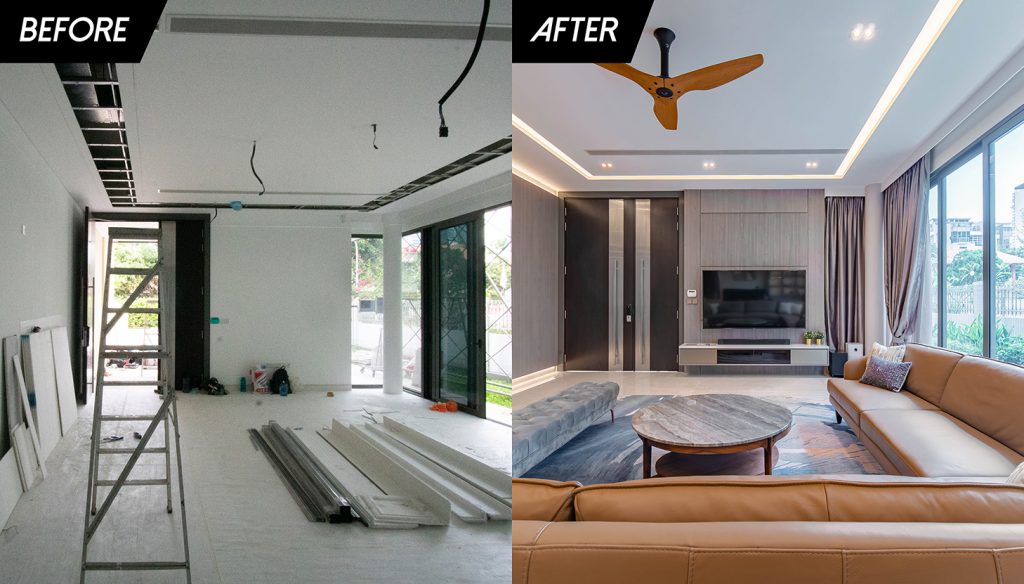
Buying a tired luxury villa in Marbella, renovating it to a premium standard, and selling it within eighteen months for a substantial profit is a genuinely viable strategy in Spain’s current market. It is also a strategy where the difference between an amateur and a properly structured investor is measured in tens of thousands of euros, sometimes more, purely in tax efficiency. Property flipping in Spain sits at the intersection of three separate tax regimes, transfer tax, VAT, and capital gains, and the choice between holding the property personally or through a properly structured Spanish company changes the outcome on every single one of them. This guide explains how serious investors structure fast-cycle luxury property deals in Spain in 2026.
The Three Tax Regimes That Govern Every Flip
Before any structuring decision makes sense, it is essential to understand the three distinct tax events involved in a buy-renovate-sell cycle, because each can be approached differently depending on how the deal is structured.
Acquisition tax. Resale (second-hand) properties trigger Impuesto de Transmisiones Patrimoniales (ITP), a regional transfer tax ranging from 4% in the Basque Country to 7% in Andalusia, 9–11% in Valencia (under Ley 5/2025, effective June 2026), and as much as 10–13% in Catalonia or the Balearic Islands for higher-value properties. New-build properties from a developer instead trigger VAT (IVA) at 10%, plus AJD stamp duty of roughly 1–1.5%.
Renovation costs. Whether VAT paid on renovation work can be recovered depends entirely on how the property is held and the buyer’s VAT registration status, a distinction that becomes central to the structuring decision below.
Disposal tax. When the property sells, the profit is taxed either as a personal capital gain (for an individual owner, at progressive rates from 19% to 28% based on the size of the gain) or as corporate profit (for a properly structured company, generally at the standard 25% corporate tax rate, or as low as 19–21% for smaller companies under recent reductions, before any further tax on eventual distribution to shareholders).
The Reduced ITP Rate for Declared Resale Investors
Several Spanish regions specifically recognize the flipping business model and offer a meaningfully reduced ITP rate to investors who declare their intent to resell within a defined period. In regions including Andalusia, qualifying real estate investors can access a reduced ITP rate as low as 2% (rather than the standard 7%) on properties under a specified value threshold (commonly cited around €500,000), provided the property is genuinely resold within two years. This single provision can represent a saving of tens of thousands of euros on a single transaction, particularly relevant for investors targeting the lower end of the luxury segment in popular flipping markets like Marbella and Estepona.
Crucially, this reduced rate generally requires the buyer to be a registered real estate business (typically operating through a properly constituted company rather than as a private individual) and to formally declare the resale intention at the time of purchase. An individual buyer without this registered status pays the full standard ITP rate regardless of their actual intent to flip the property quickly.
Personal Ownership vs. Corporate Structure: The Core Decision
Buying as an individual is administratively simpler but forecloses several of the structuring advantages available to a properly run company. Profit on sale is taxed as a personal capital gain under the progressive savings income scale (19% to 28%), renovation VAT generally cannot be recovered (since a private individual is not VAT-registered for these purposes), and the property cannot easily be transferred to a future buyer via a share sale rather than a direct conveyance, removing one of the more sophisticated exit strategies available to corporate holders.
Buying through a Spanish SL (Sociedad Limitada) structured genuinely as a real estate trading business opens several distinct advantages, but only if the structure is set up and operated correctly from the outset.
The Critical Distinction: Trading Stock vs. Fixed Asset
This is the single most important accounting and tax classification decision in any corporate flipping structure, and it is frequently misunderstood even by investors who have correctly chosen to incorporate.
If a property is properly classified on the company’s books as existencias (inventory or trading stock), meaning the company’s genuine business activity is buying, improving, and reselling real estate, rather than holding it for rental income or personal use, this classification carries real tax consequences. The property is treated as a current asset of the business rather than a long-term investment, renovation costs become deductible business expenses against the eventual sale price rather than capitalized improvements added to a personal cost basis, and VAT paid on renovation invoices can generally be recovered (input VAT credited against the company’s VAT liability), provided the company is properly registered and the work is invoiced correctly with VAT itemized.
If instead the property sits on the books as inmovilizado (a fixed asset, the classification appropriate for buy-to-let or long-term holding), the company forfeits much of this flexibility, and crucially risks being reclassified by the tax authority as a sociedad patrimonial (a passive asset-holding company) if its income is predominantly derived from this kind of passive holding rather than active trading. This reclassification matters enormously: a sociedad patrimonial loses access to the reduced tax rates and incentives available to genuine small and medium trading enterprises, and is taxed under a considerably less favourable regime designed to prevent individuals from sheltering purely passive wealth inside a corporate wrapper to access lower rates never intended for that purpose.
For a genuine flipping operation, the property must be correctly booked as trading stock from day one, supported by the company’s actual operating pattern (a track record or credible business plan involving multiple buy-renovate-sell cycles, not a single isolated transaction dressed up as a business), since the tax authority can and does scrutinize whether a company’s classification matches its real economic substance.

VAT Recovery: Where the Real Savings Live
For a properly structured trading company, the ability to recover VAT paid on renovation costs is frequently the single largest tax advantage over personal ownership. Luxury renovation work, premium materials, bespoke kitchens, marble, smart home systems, swimming pool construction, landscaping, can easily represent VAT at the standard 21% rate on hundreds of thousands of euros of spend. For an individual owner, this VAT is simply a sunk cost. For a properly VAT-registered trading company, this input VAT can generally be reclaimed against the company’s output VAT liability (which, depending on the final sale structure, may itself involve VAT on the eventual sale if the renovation is substantial enough to qualify the property as a “first transfer of a substantially renovated property,” triggering IVA on sale rather than the buyer’s ITP).
This last point requires careful planning: Spanish tax law specifically distinguishes between a renovation substantial enough to constitute a “first transfer” subject to VAT (broadly, where the renovation cost represents a significant proportion, commonly cited around 25%, of the property’s value) and a more modest renovation that leaves the eventual sale subject to standard ITP under the buyer’s responsibility. Structuring the renovation scope and the resulting sale tax treatment deliberately, rather than discovering the classification after the fact, is a genuine area where professional tax advice changes the economics of a deal.
The Holding Period: Why Speed Has a Tax Cost
Spain’s regional reduced ITP rates for declared resale investors typically require completion of the resale within a defined window, commonly two years, after which the reduced rate is retroactively lost and the standard rate becomes due, often with interest and penalties for the shortfall. This creates a genuine tension for luxury flips, where premium renovations, particularly those involving custom work, imported materials, or significant structural change, can easily extend beyond initial timelines. Any investor relying on a reduced regional ITP rate must build realistic renovation timelines into their underwriting from the outset, with contingency for the delays that are, as experienced Spanish property professionals consistently note, the norm rather than the exception in renovation projects.
Exit Strategy: Asset Sale vs. Share Sale
For larger or multiple-property corporate holdings, a sophisticated exit consideration is whether to sell the underlying property directly (an asset sale, triggering the buyer’s ITP liability and the seller’s standard capital gains treatment) or to sell the shares of the holding company itself (a share sale, which can in some structures avoid triggering ITP on the transaction, since ITP generally applies to direct transfers of real property, not corporate shares).
This is an area where Spanish anti-avoidance rules specifically intervene: where a company’s principal asset is Spanish real estate and the company exists predominantly to hold that property rather than to genuinely trade, tax authorities can re-characterize a share sale as a property transfer for tax purposes, defeating the intended ITP saving. This makes the strategy considerably more viable for larger, more complex corporate structures (such as multi-property portfolios with genuine operational substance) than for single-asset vehicles created purely to flip one villa, where the anti-avoidance risk is correspondingly higher relative to the modest savings available on a single transaction.
Realistic Cost Modelling: What the Math Actually Looks Like
A disciplined flip underwriting model needs to account for the full chain of costs, not just headline ITP and renovation spend. Total acquisition costs (ITP or the reduced investor rate, notary, registry, and legal fees) typically run 10–15% of the purchase price. The full renovation budget should include a genuine contingency reserve, commonly recommended at 15–20% above the base estimate, given how frequently Spanish renovation projects run over budget and schedule, particularly for older properties with unexpected structural issues. On the sale side, estate agent commission (typically 3–6% of the final sale price, plus 21% VAT on that commission itself) represents the largest single selling cost, alongside whichever capital gains or corporate tax treatment applies to the resulting profit, and the municipal Plusvalía tax based on the increase in official land value during the holding period.
The investor’s actual return depends entirely on the “spread”, the difference between total net sale proceeds and the complete all-in cost stack, not on the gross uplift between purchase price and eventual sale price. Sophisticated investors model this spread conservatively from the outset, rather than relying on generalized return assumptions that ignore the cumulative weight of Spain’s layered tax and transaction cost structure.
Practical Guidance for Structuring a Flip
Decide your structure before you make an offer, not after. Converting from personal to corporate ownership after purchase forfeits most of the structuring advantages described above and can itself trigger additional transfer tax.
Confirm your regional reduced ITP eligibility specifically, including the exact value threshold, resale window, and registration requirements in the autonomous community where you are buying, since these provisions vary meaningfully by region and change periodically.
Classify the property correctly as trading stock from inception, supported by genuine operational substance (multiple transactions, a credible business plan, proper company registration for VAT purposes) rather than treating incorporation as a label applied to what remains, in substance, a single personal investment.
Plan the VAT treatment of the eventual sale deliberately, particularly for substantial renovations that may push the property into “first transfer” VAT territory rather than standard resale ITP treatment.
Build realistic timelines and contingency into your underwriting, particularly where a reduced regional ITP rate depends on completing the resale within a fixed window.
Engage a Spanish tax adviser and real estate lawyer with specific flipping experience before structuring the deal, not after it closes. The difference between a well-structured and a poorly structured flip is frequently the entire profit margin on the transaction.
The Bottom Line
Fast-cycle luxury property investment in Spain remains genuinely profitable for disciplined, well-advised investors, but the tax architecture surrounding it is layered and unforgiving of improvisation. The right corporate structure, correctly classified from day one, combined with deliberate planning around regional ITP incentives, VAT recovery, and the eventual sale’s tax treatment, can meaningfully widen the achievable margin on a deal compared to personal ownership. Given how directly these structuring decisions affect the bottom line, and how closely Spanish tax authorities scrutinize whether a company’s stated trading classification matches its real economic substance, this is an area where professional Spanish tax and legal advice should be engaged before, not after, capital is committed.
This article is for general informational purposes only and does not constitute legal, tax, or financial advice. Spanish property tax law, including ITP rates, VAT treatment, and corporate tax classification, varies by region and is subject to periodic change. Before structuring any property investment or flipping operation in Spain, consult a qualified Spanish tax adviser and real estate lawyer to assess your specific transaction and structure.
Leave a Reply