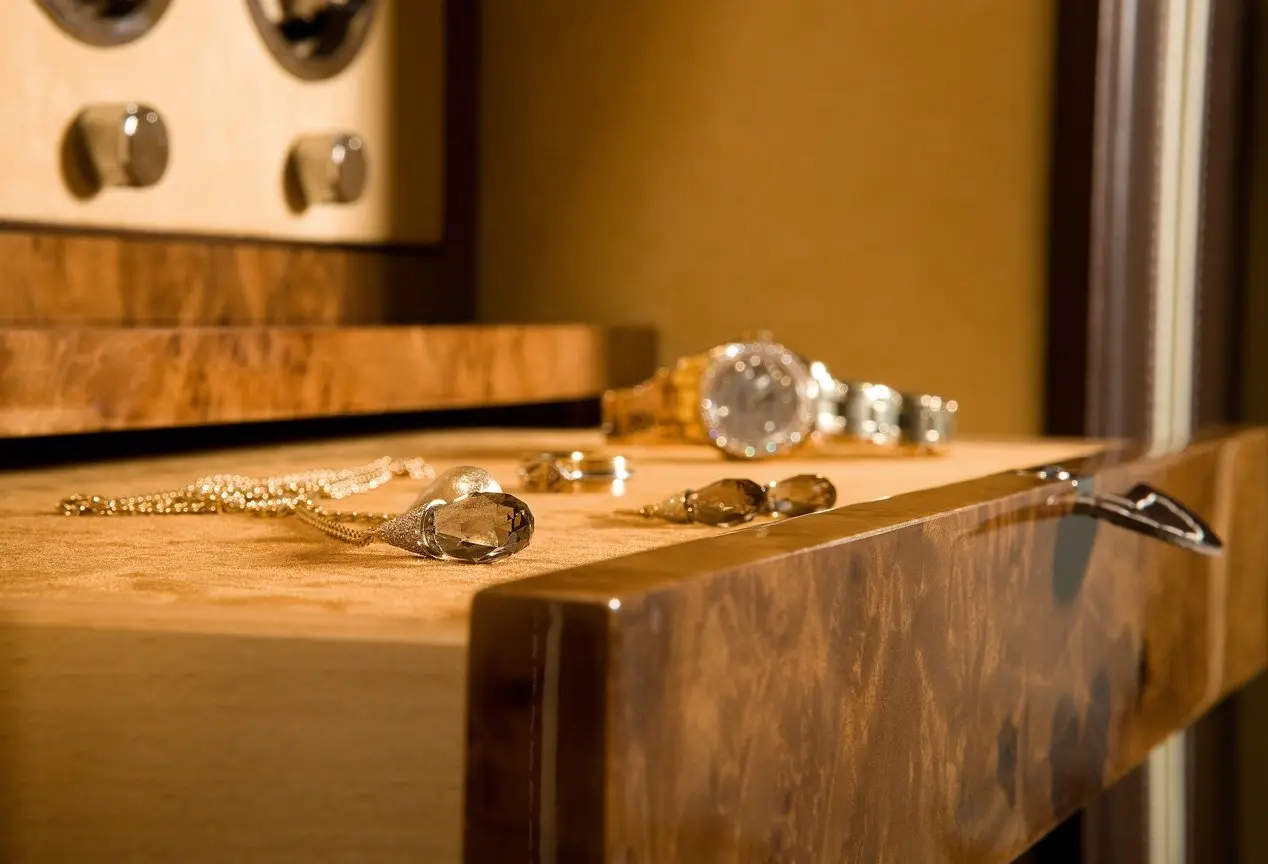
A standard Spanish home insurance policy will cover your contents up to a modest cap, often a few thousand euros for valuables as a category, and will treat your collection of Patek Philippe watches or your wife’s diamond jewelry as an afterthought rather than the meaningfully valuable assets they actually are. If your home is a luxury villa with a rebuild cost north of €750,000, or your personal property includes serious collections of art, watches, or jewelry, a standard policy is not simply inadequate; it is structurally incapable of providing the protection you need. This guide explains how premium home insurance works for high-value properties and luxury valuables in Spain, what genuinely matters when selecting coverage, and the documentation that determines whether a claim is settled smoothly or becomes a dispute.
Why Standard Spanish Home Insurance Falls Short
General home insurance policies in Spain are built around typical household risk: fire, water damage, theft, vandalism, and basic civil liability. Within this framework, valuable items face two structural limitations that catch high-net-worth homeowners off guard.
First, most standard policies impose blanket caps on the total value of contents covered for categories like jewelry, watches, and art, regardless of what those specific items are actually worth. An engagement ring or a vintage Rolex that would need individual scheduling and a proper appraisal under a standard policy might simply fall under a generic “valuables” sublimit, often capped in the low thousands of euros, a fraction of its real worth.
Second, insurers commonly require that any individual item exceeding a certain value (frequently cited around €6,000 per item with major Spanish insurers) be declared separately and specifically. If you have not done this for your collection, you may discover only after a loss that your policy never actually covered the item at anything close to its real value.
What Qualifies as a “High-Value” Property in Spain
Spanish insurance specialists generally classify a property as requiring specialized high-value coverage when its reconstruction value (the cost to rebuild it from scratch, distinct from market value or land value) exceeds approximately €750,000, or when the contents within it are valued above roughly €150,000. Properties exceeding €1 million in value are explicitly recognized across the Spanish insurance market as needing dedicated, specially designed policies rather than enhanced versions of standard cover.
This distinction matters because reconstruction value and market value are genuinely different figures. A villa’s land might represent a significant share of its total market price, particularly in prime coastal or urban locations, but reconstruction cover specifically needs to reflect the cost of rebuilding the physical structure, including premium materials, custom millwork, imported stone, bespoke architectural features, and integrated technology systems, all of which can push true reconstruction costs well beyond what a simple market-value calculation would suggest.
The Core Problem: Underinsurance
The single most common and costly mistake among owners of high-value Spanish properties is underinsurance, insuring a property for less than its actual rebuild value. If your home’s genuine reconstruction cost is €2,000,000 but your policy only insures it for €1,000,000, you are underinsured by 50%, and in the event of a significant claim, many insurers will apply that same percentage shortfall to your payout, meaning you might receive only half of what you actually need to rebuild, even on a partial loss.
This is precisely why specialized high-value insurers conduct, and require, professional appraisals before issuing a policy, sending an expert assessor to physically examine the property, document custom features and materials, and produce an accurate reconstruction estimate, rather than relying on a homeowner’s own guess or a generic per-square-metre calculation.
Insuring the Property Itself: What Genuine High-Value Cover Includes
A properly structured policy for a luxury Spanish villa should include several features absent from standard cover:
Adequate dwelling and reconstruction coverage, calculated through professional appraisal rather than self-reported estimates, ideally with extended replacement cost protection that pays above the stated policy limit if reconstruction costs exceed the original estimate, a genuine risk given how long bespoke restoration of custom-built luxury properties can take.
Comprehensive outdoor and lifestyle coverage, extending to gardens, mature landscaping (a frequently overlooked asset that can represent tens of thousands of euros in value on an established luxury estate), terraces, swimming pools, garden furniture, and perimeter walls or fencing.
Substantially higher liability limits. Affluent homeowners face disproportionate liability exposure: visible wealth invites litigation, domestic staff and groundskeepers create employer liability, and swimming pools, private events, and frequent guests all raise the likelihood of a significant claim. Specialist Spanish brokers can extend personal liability cover up to €1 million or beyond, a sensible minimum for any owner of a significant property with staff or an active social calendar.
Flexible occupancy terms. Many high-value Spanish properties are second homes occupied only part of the year. Standard policies often restrict theft coverage if a property sits unoccupied beyond a defined period (commonly around 30 days, sometimes extendable to 180 days with prior notice). Confirm your specific policy’s vacancy terms if your Spanish property is not your primary residence.

Insuring Watch Collections and High-End Jewelry: The Real Difference
This is where the gap between standard and specialist coverage becomes most dramatic, and where the most expensive insurance mistakes typically occur.
Individual scheduling versus blanket limits. A genuinely protective policy for a serious watch or jewelry collection schedules each significant piece individually, recording its specific agreed value, rather than relying on a single blanket sublimit for “valuables” as an undifferentiated category. Individual scheduling provides what is known as agreed value coverage: the insurer agrees in advance on the item’s value, removing ambiguity and dispute at the time of a claim.
No depreciation, full replacement value. Standard policies typically pay depreciated actual cash value for damaged or lost items. Specialist coverage for watches and jewelry pays the full agreed-upon replacement cost, a critical distinction given that fine watches and jewelry frequently appreciate rather than depreciate over time, the opposite of how standard insurance assumes personal property behaves.
Mysterious disappearance coverage. This is a specific and important protection: it covers items that go missing under circumstances that cannot be definitively explained, without requiring proof of theft, a meaningful gap in many standard policies, which typically require evidence of a specific covered peril (burglary, fire) before paying a claim.
Worldwide coverage. A watch or piece of jewelry that you actually wear, rather than keeping permanently in a vault, needs coverage that extends beyond your Spanish property to wherever you travel. Specialist luxury policies typically provide worldwide protection by default; many standard home policies do not.
Zero or minimal deductibles on valuables. Specialist insurers commonly waive deductibles entirely for scheduled high-value items, recognizing that a deductible calculated as a percentage of dwelling coverage makes little sense applied to a single watch or ring.
Documentation: The Single Factor That Determines Claim Outcomes
No insurance structure, however well-designed, protects you without proper documentation, and this is the area where collectors and homeowners most frequently underprepare.
Professional appraisals. Obtain current, professional valuations from accredited specialists for any watch, jewelry piece, or art object of significant value. These appraisals should be refreshed periodically, generally every two to three years for actively appreciating categories like fine watches and jewelry, since insuring against a stale valuation reintroduces the underinsurance risk discussed earlier.
Photographs and certificates. Every significant item should be photographed clearly, with any original certificates, receipts, or provenance documentation retained alongside the images. For high-end watches, original box and papers can materially affect both insured value and eventual resale value, and should be documented as part of the item’s record, not stored separately and forgotten.
Secure backup of records. Keep copies of appraisals, photographs, and certificates somewhere genuinely separate from the property itself: cloud storage, a bank safe deposit box, or with your insurance broker. Records destroyed in the same fire or flood that damaged the insured items themselves are of no use when filing a claim.
Physical security requirements. For significant jewelry collections, insurers frequently require a proper safe to be installed as a condition of coverage, and may specify a minimum security rating. Confirm this requirement before assuming a policy quote reflects your actual final premium; retrofitting adequate security after underwriting can change your terms.
Report changes promptly. Renovations, new acquisitions, and significant appreciation in existing collections should all be reported to your insurer as they occur, not discovered retroactively during a claim. A five-year-old appraisal on a watch collection that has meaningfully appreciated is a underinsurance risk hiding in plain sight.
Coordinating Insurance With Your Broader Wealth Strategy
For genuinely high-net-worth owners, property and valuables insurance should not sit in isolation from broader financial and estate planning. Several practical principles apply specifically to this intersection.
Umbrella liability sized to net worth. A common professional guideline is that personal liability coverage, beyond the specific limits attached to your home policy, should be sized at or above your total net worth, particularly if you employ staff, host frequent guests, maintain a pool, or hold any board or business positions that increase your personal litigation exposure.
Insurance as part of estate documentation. Properly appraised, scheduled, and insured valuables also produce a clean, documented valuation trail useful for broader estate and succession planning, an unplanned but genuinely valuable side benefit of doing the insurance documentation correctly in the first place.
Work with a specialist broker, not a generalist. Standard Spanish home insurers and brokers are generally well-equipped for typical residential risk but frequently lack the specific expertise, and underwriting relationships, needed to properly structure cover for villas above €1 million or serious art, watch, and jewelry collections. A broker specializing specifically in high-net-worth and luxury asset insurance in Spain will understand which underwriters genuinely specialize in this category, rather than treating a luxury property as simply a larger version of a standard policy.
The Bottom Line
Insuring a luxury Spanish property and its contents properly requires moving deliberately beyond the assumptions built into standard home insurance: accurate reconstruction valuation rather than market-price guesswork, individually scheduled agreed-value coverage for significant watches and jewelry rather than blanket sublimits, substantial liability protection matched to your actual exposure, and rigorous, regularly updated documentation for everything of meaningful value. The cost difference between standard and properly structured specialist coverage is real, but it is modest set against the actual risk of discovering, after a major loss, that your policy was never designed to protect what you actually owned.
This article is for general informational purposes only and does not constitute insurance, financial, or legal advice. Insurance requirements, coverage availability, and underwriting criteria vary by insurer, property, and individual circumstances. Before selecting or renewing a home insurance policy in Spain, consult a qualified insurance broker specializing in high-value properties and luxury asset coverage to assess your specific needs.
Leave a Reply