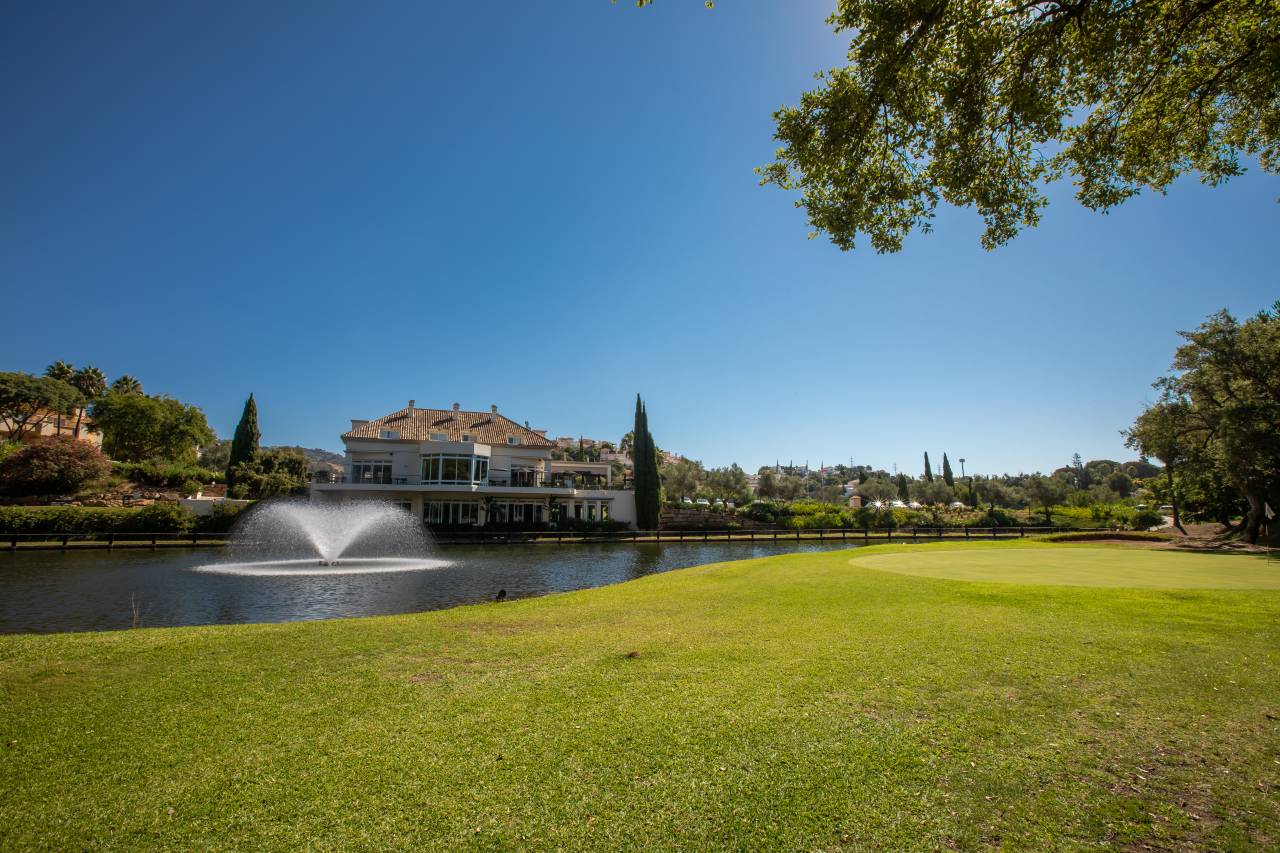
Networking among Spain’s wealthy expatriate community does not happen at conferences or chamber-of-commerce mixers. It happens on the back nine of a private course in Marbella, over dinner in an unmarked Madrid townhouse, or in a members-only lounge where phones are confiscated at the door. For high-net-worth expatriates relocating to Spain, understanding where these communities gather is not a lifestyle curiosity; it is a practical tool for building business relationships, finding trusted advisers, and integrating into elite Spanish and international circles. This guide maps the private clubs and golf courses where premium expats genuinely network in 2026.
Why Private Clubs Matter for Expatriate Networking
Spain’s business culture relies heavily on personal relationships and trust built over time, more so than in transactional Anglo-American business environments. For expatriates, this presents both a challenge and an opportunity: traditional cold outreach rarely works, but the right club membership can compress years of relationship-building into months.
Private clubs serve several functions for expatriates: access to vetted, high-quality contacts; a controlled environment where business and social life intersect naturally; introductions to local professionals (lawyers, bankers, real estate specialists) who are otherwise difficult to vet from abroad; and simply a sense of belonging in a new country. For many relocating executives, entrepreneurs, and investors, the membership fee is viewed as a business development cost, not a leisure expense.
Golf: Spain’s Premier Networking Sport
Golf occupies a unique position in Spanish expatriate culture. Unlike in some countries where golf is seen as a retiree’s pastime, in Spain—particularly along the Costa del Sol, often nicknamed the “Costa del Golf”—golf clubs function as the primary networking infrastructure for international business communities.
Real Club de Golf Las Brisas (Marbella)
Widely regarded as Marbella’s most exclusive golf club, Real Club de Golf Las Brisas operates on a strict members-only model. Unlike resort courses that welcome paying visitors, Las Brisas prioritizes its membership community, creating a tight-knit environment where introductions matter and reputation precedes access. The membership process typically requires sponsorship from existing members, and waiting lists are common. This exclusivity is precisely what attracts established business figures: the course filters for genuine commitment rather than transient tourism.
Atalaya Golf & Country Club (Marbella)
Atalaya stands out for its remarkable international diversity, with members representing approximately 36 nationalities. This makes it one of the most genuinely cosmopolitan networking environments on the Costa del Sol. The club operates two courses and maintains an active social calendar with events throughout the year, creating regular touchpoints for relationship-building beyond just rounds of golf. Membership options range from full individual memberships to golf shares (a property-linked ownership structure), with annual fees and joining costs varying based on membership category.
Los Naranjos Golf Club Business Club (Marbella)
Los Naranjos has formalized the networking function explicitly through its dedicated Business Club, designed specifically to combine golf with structured business development. This is a useful model for expatriates who want golf access framed explicitly as a professional development tool, rather than informally hoping connections emerge.
Higuerón Marbella Golf Resort
A newer entrant to the Costa del Sol’s exclusive golf scene, Higuerón offers annual memberships with a strong emphasis on the social atmosphere surrounding the golf experience, including an on-site restaurant and an active members’ competition calendar that creates recurring opportunities to build relationships over time rather than one-off encounters.
Membership Costs: What to Expect
Premium golf club memberships in Spain in 2026 generally fall into the following ranges:
- Joining fees: €1,000–€2,500 for premium clubs (some ultra-exclusive clubs charge significantly more)
- Annual membership dues: €2,500–€4,500 at premium clubs
- Mid-tier clubs: €1,200–€2,200 annually
- Peak season supplements: Often an additional €10–€30 per round during high season
For context, regular players (50+ rounds per year) generally find membership financially preferable to pay-and-play green fees, which typically range €40–€120 per round at premium courses. But the calculation for most networking-focused expatriates is not about golf economics; it is about consistent access to a community.
The Costa Blanca Alternative
While Marbella and the Costa del Sol dominate the golf-networking conversation, the Costa Blanca (around Alicante) has emerged as a significant secondary hub, particularly attractive to European buyers combining golf membership with property investment. Clubs here tend to offer slightly more accessible membership structures while still providing meaningful access to an international business and retiree community.
Private Business Clubs: Beyond the Fairway
For expatriates whose networking priorities lean toward formal business development rather than golf, Spain’s major cities host several private members’ clubs specifically structured around professional advancement.
Madrid International Business Club (MIBC)
MIBC operates an explicitly invitation-only model targeting senior executives. Eligibility criteria are strict: candidates must typically have a minimum of seven years in an executive or decision-making position, have led at least 30 full-time employees, and have managed company turnover of at least €5 million. New members must be recommended or invited by existing members, and applications go through a Membership Committee that conducts reference checks.
The club’s Advisory Board comprises senior executives from diverse industries, and the club has formed partnerships with academic institutions for executive education. For expatriate C-suite executives, business owners, and senior professionals, MIBC represents one of the more structured and credential-driven entry points into Madrid’s business elite, distinct from purely social clubs.
Club 23 Barcelona
With roots tracing back to 1995, Club 23 Barcelona originated from informal gatherings of financial sector professionals and has since broadened to include participants from legal, artistic, scientific, and sociological fields. This breadth makes it a useful networking venue for expatriates whose interests or business activities span multiple sectors, rather than being confined to a single industry vertical.
The Cover (Barcelona)
Located within the five-star Sir Victor hotel in Barcelona’s Eixample district, The Cover represents a newer model of private club explicitly targeting entrepreneurs, innovators, and culturally engaged professionals. Its philosophy spans three pillars: business, wellbeing, and community, reflecting a broader trend among younger private clubs to integrate networking with lifestyle and wellness amenities (spa access, curated cultural programming) rather than treating business and leisure as separate domains.
Vega Private Members Club (Madrid)
A notable 2026 addition to Madrid’s exclusive club scene, Vega occupies 1,000 square metres on Madrid’s prestigious Calle Lagasca, in the city’s Golden Mile district. The club transforms its function throughout the day: daytime hours offer private meeting rooms, coworking spaces, and a podcast studio, while evenings shift to fine dining and curated social events. The club has drawn attention for its strict no-mobile-phone policy, reflecting a broader trend among the newest generation of elite clubs toward prioritizing genuine in-person connection and discretion over visibility. Membership reportedly runs in the range of several thousand euros annually, positioning it among Madrid’s more premium offerings.
Business Club WBC (Spain-wide)
WBC positions itself as a creative space for entrepreneurs focused on developing business skills while maintaining personal life balance, organizing collaborative activities, travel, and business idea implementation among members. This represents a more accessible entry point compared to invitation-only executive clubs, appealing to expatriate entrepreneurs and small business owners rather than only C-suite executives.
How Access Actually Works: The Unwritten Rules
Across nearly all of Spain’s elite private clubs, a consistent pattern emerges that differs significantly from typical Anglo-American club membership models.
Sponsorship matters more than money. Most exclusive clubs require an existing member to recommend or invite a candidate. Simply having the funds to pay membership fees does not guarantee acceptance. This is intentional: clubs protect the quality and trust level of their community by filtering for genuine fit, not just financial capacity.
Committees conduct real vetting. Membership committees at the most exclusive clubs review candidates’ professional backgrounds, references, and perceived alignment with the club’s culture. Expect this process to take weeks or months, not days.
Patience pays. Waiting lists at the most prestigious clubs (such as Las Brisas) are common. Expatriates should plan club membership as a medium-term integration strategy, not an immediate solution upon arrival.
Reputation precedes you. In Spain’s relationship-driven business culture, how you are introduced matters enormously. Securing an introduction from a respected existing member dramatically improves your prospects compared to a cold application.
Hybrid memberships are increasingly common. Many premium clubs now combine golf, dining, wellness, and coworking under one membership, reflecting a broader shift toward lifestyle-integrated networking rather than single-purpose social clubs.
Practical Guidance for Expatriates Seeking Membership
Start before you arrive. If possible, identify target clubs and seek introductions through existing professional networks, your employer, or relocation consultants before moving to Spain. Arriving with a warm introduction in hand significantly accelerates the process.
Match the club to your goals. Golf-centric clubs like Las Brisas or Atalaya suit those prioritizing relationship-building over time through recurring informal interaction. Structured business clubs like MIBC suit those seeking formal executive networking with clear professional criteria. Newer hybrid clubs like The Cover or Vega suit those seeking a blend of business, culture, and lifestyle.
Budget realistically. Beyond membership fees, factor in the implicit cost of participation: dining, events, appropriate attire, and the time commitment required to build genuine relationships rather than simply holding a membership card.
Consider geography carefully. Marbella and the Costa del Sol suit those whose business interests are wealth management, real estate, hospitality, or international trade with a Mediterranean lifestyle focus. Madrid suits those in finance, corporate leadership, and policy-adjacent industries. Barcelona suits creative industries, technology, and design-oriented entrepreneurs.
Be patient with integration. Spanish and international elite networks reward consistency. Attending events regularly over 12–24 months typically yields far more meaningful business relationships than sporadic high-effort attempts.
The Bottom Line
Spain’s exclusive club ecosystem reflects a broader truth about doing business successfully as an expatriate: relationships are built deliberately, over time, in curated environments designed to filter for trust and genuine engagement. Whether your path runs through the manicured fairways of Las Brisas, the vetted boardrooms of the Madrid International Business Club, or the phone-free lounges of Madrid’s newest private members’ clubs, the principle remains the same. Access is earned through patience, sponsorship, and authentic participation, not simply purchased. For expatriates willing to invest the time, these clubs offer something far more valuable than golf or fine dining: a genuine foothold in Spain’s business and social elite.
This article is for general informational purposes only and does not constitute business, financial, or investment advice. Club membership costs, admission criteria, and availability change frequently and are subject to each institution’s own policies. Contact clubs directly for current membership terms, costs, and eligibility requirements before making any commitments.
Leave a Reply