Banking is one of the first practical problems a newcomer to Spain runs into, and one of the last they think about before moving. You need a Spanish account to pay rent, set up utilities, receive a salary, and direct-debit your taxes. You need a way to move money from home without losing a slice of it to exchange margins every month. And if you hold significant assets, you need a structure that keeps you compliant in two countries at once.
There is no single right answer, because banking in Spain for foreigners depends heavily on one thing most guides bury: your passport. Americans face FATCA friction that leads some institutions to decline them outright. Britons face UK banks that increasingly close non-resident accounts after a move. This guide covers the Spanish account you will need, the international layer that sits alongside it, and the reporting obligations that follow you across the border.
Opening a Spanish Bank Account
Spain draws a firm distinction between resident and non-resident accounts, and knowing which one you are opening avoids most of the friction.
A resident account (cuenta de residente) is the normal option once you are legally living in Spain. Banks typically ask for your NIE or TIE, your passport, proof of your Spanish address (commonly your certificado de empadronamiento or a utility bill), and some evidence of your economic situation, such as an employment contract, your autónomo registration, or a pension statement. If those documents are not yet in place, our guide to the NIE, TIE, and empadronamiento explains the order to obtain them in, which matters because the bank account often sits at the end of that chain.
A non-resident account (cuenta de no residente) is what you open if you own property in Spain or spend time here without being resident. It generally requires a certificado de no residencia issued by the National Police, which banks usually expect to be periodically renewed, and these accounts commonly carry higher maintenance fees than resident equivalents. Many buyers open one specifically to direct-debit the IBI, utilities, and community fees on a Spanish property, as covered in our guide to the annual taxes of owning property in Spain.
Two practical points worth knowing. Fees in Spain are not trivial: many traditional banks charge monthly maintenance unless you meet conditions such as direct-depositing a salary or pension, holding a minimum balance, or taking additional products, and the fully digital Spanish banks and the digital arms of the large groups are often materially cheaper. And requirements vary between branches of the same bank, so if one office refuses your file, it is often worth trying another rather than assuming the answer is final.
Deposits in Spanish banks are protected by the Fondo de Garantía de Depósitos up to €100,000 per depositor per institution, the standard applied across the EU. The Banco de España’s consumer portal gives the arithmetic that trips people up: a couple holding €120,000 in a joint account is covered in full, because the limit applies per holder, while the same couple holding €240,000 would be covered for only €200,000.
There is an exception that matters enormously to new arrivals and that almost no relocation guide mentions. For three months, the FGD covers the entire balance, with no €100,000 ceiling, where the money comes from the sale of a private residential property, or from a one-off payment tied to marriage, divorce, retirement, redundancy, disability or death, or from an insurance payout or compensation for a criminal offence or judicial error. If you have just sold a house abroad and the proceeds are sitting in one Spanish account while you look for somewhere to buy, you are fully protected — but only for those three months. After that, the ordinary limit returns and the standard advice to split large balances across institutions applies again.
The Passport Problem: FATCA and Non-Resident Closures
Start with the constraint, not the brochure. Under the US Foreign Account Tax Compliance Act (FATCA), foreign banks must report US clients to the IRS, and the compliance cost leads some institutions across Europe to limit or refuse American customers. No move abroad ends a US citizen’s reporting duties either, and the two thresholds involved are widely misunderstood. The IRS sets them out side by side. An FBAR is required once your foreign accounts exceed $10,000 in aggregate at any point in the calendar year, which almost every expat clears immediately; note that it goes to FinCEN, a separate Treasury bureau, and not to the IRS with your return. Form 8938 is the one people get wrong: for Americans living abroad the threshold is far higher than the domestic figure, at more than $200,000 on the last day of the year or $300,000 at any point for a single filer, doubling to $400,000 and $600,000 for a couple filing jointly. Filing one does not excuse you from the other. For Americans, the workable path is usually to keep a US-domiciled account at the core of the structure, add a Spanish account for local life, and use a multi-currency provider for moving between them.
US citizens should also keep a US routing number for a specific practical reason: the IRS will not deposit refunds into a foreign account. Closing every US account on departure is a common and avoidable mistake.
British expats face a different problem. UK banks have become notably more willing to close the accounts of customers who move abroad, so the standard advice is to arrange an international or expat account before you leave, while you still have a UK address and standing. Get caught out and you can lose your main account mid-relocation, at exactly the moment you need it most.
The International Layer: Moving Money Without Losing It
Almost every expat in Spain ends up with income in one currency and expenses in another. Over a decade of monthly transfers, the difference between a high-street bank’s exchange margin and a specialist provider’s is not trivial.
Multi-currency providers and specialist money-transfer services typically convert much closer to the real mid-market rate than traditional banks, give you local account details in several countries so you can receive income natively, and often let you fix a rate in advance or automate regular transfers. That last feature matters for pensioners in particular, since it smooths what would otherwise be a monthly gamble on the exchange rate.
One distinction to understand clearly before you move serious money: many of these providers are electronic money institutions, not banks. Your balance is safeguarded under a different legal regime rather than covered by a deposit guarantee scheme. They are excellent tools for moving and spending money; they are not the right place to park your savings. Keep the balance you actually need in transit there, and your reserves in an insured bank deposit.
The structure most advisers end up recommending is simple: a Spanish account for local life, a home-country account you keep open deliberately, and a multi-currency provider bridging the two.

Which Institutions Foreign Residents Actually Use
Most guides stop at “open a Spanish account” without saying where. In practice the market splits into three groups, and a sensible setup usually draws on more than one.
The large branch networks. CaixaBank, BBVA, Banco Santander, Banco Sabadell and Bankinter are what you will find on the high street, and what most landlords, employers and gestorías expect to see on a direct-debit mandate. They carry the heaviest fee structures, typically a monthly maintenance charge waived if you direct-deposit a salary or pension above a threshold, keep a minimum balance, or take additional products such as insurance. If you are receiving a Spanish salary or a state pension, that waiver usually costs you nothing, and a branch relationship is genuinely worth having when you come to apply for a mortgage.
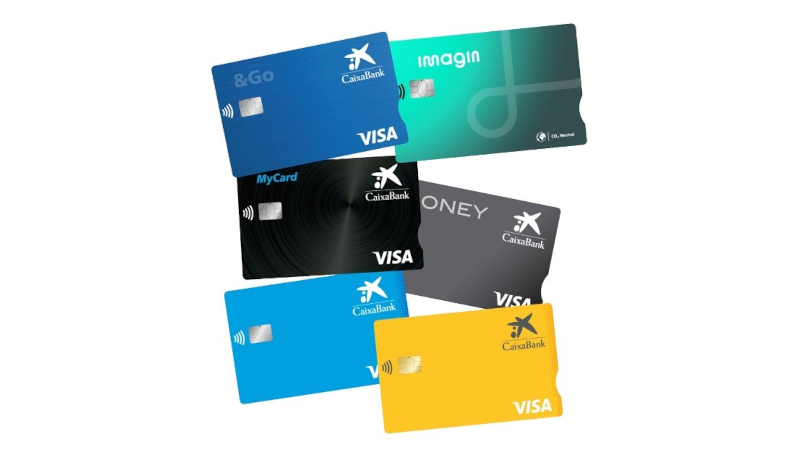
The digital arms of those same groups. Openbank belongs to Santander and imagin belongs to CaixaBank. They sit on the same banking licences and under the same deposit guarantee as their parents, but strip out the branch and, with it, most of the fees. For a foreign resident whose income arrives from abroad rather than from a Spanish employer, and who therefore cannot satisfy a salary-deposit condition, these are often the cheapest route to a genuine Spanish IBAN.
The pan-European digital players. N26, Revolut, Wise and bunq are the group where the small print matters most, for reasons the next section sets out. One practical point first: check whether the provider issues you a Spanish IBAN or a foreign one. Refusing a SEPA-area IBAN is not permitted, but a stubborn minority of Spanish employers, utilities and public bodies still balk at a direct debit drawn on a German or Lithuanian account. The problem is shrinking every year. It has not quite disappeared.
One specific warning for US persons before you buy anything through a Spanish bank. The American PFIC regime taxes US persons punitively on most non-US pooled investments, and that category includes the European mutual funds and ETFs a Spanish branch will cheerfully sell you alongside your account. An adviser unfamiliar with the rule can assemble a portfolio that is entirely sensible under Spanish law and ruinous under American law, and the damage is typically discovered years later at filing time. Americans living in Spain are generally better served by a US-registered adviser who specialises in expatriates and can build a PFIC-compliant portfolio that still works under Spanish rules. This is a reason to be careful about the investment products your Spanish bank offers you. It is not a reason to avoid a Spanish current account.
Whichever you choose, ask for the fee schedule in writing before you sign. Spanish banks publish a tarifas document setting out maintenance charges, transfer costs, card fees and the precise conditions that waive them, and it is the conditions rather than the headline fee where the money actually sits. Work out the all-in annual cost for your real pattern of use rather than the advertised rate, and remember that the same bank can quote differently at different branches.
The Advice Trap Expats Fall Into
This deserves its own warning, because it is one of the most common ways foreign residents in Spain lose money. The expat world attracts salespeople presenting themselves as advisers while pushing offshore investment bonds and similar products carrying high, opaque charges and long lock-in periods with punitive exit penalties. The pitch usually leans on tax efficiency and sounds plausible.
Three defences work, and the first one takes two minutes. In Spain, only certain registered entity types may legally provide investment advice: the CNMV lists them as sociedades and agencias de valores, portfolio managers, empresas de asesoramiento financiero (EAF), collective-investment managers, and credit institutions. The official registers show not only whether a firm is authorised but which services it may offer and the maximum fees it may charge. If the person advising you is not in that register, they are not an adviser in any sense the law recognises. The CNMV also publishes a searchable list of unauthorised entities, known locally as chiringuitos financieros, alongside alerts issued by foreign regulators. Check both before a first meeting, not after. Second, favour advisers paid by you rather than by product commissions, ask directly how the person in front of you is remunerated, and treat evasiveness as an answer in itself. And be sceptical of anyone promising tax-free returns to a Spanish tax resident, because as our guides to Spain’s Wealth Tax and IRPF for foreign residents set out, Spain taxes residents on worldwide income and assets, and wrappers that appear to sidestep that generally do not survive contact with Hacienda.
Reporting: What You Must Declare
Holding accounts abroad is entirely legal. Failing to declare them is not, and this is where otherwise careful people come unstuck.
As a Spanish tax resident, you must file Modelo 720, the foreign-asset declaration, if your overseas holdings exceed €50,000 in any one of three categories: bank accounts, securities and investments, or real estate. The threshold applies to each category separately rather than to your total, which catches people out in both directions. It is filed between 1 January and 31 March covering the position at the previous 31 December. Cryptoassets are the exception the Agencia Tributaria states explicitly: they are not reported on the 720 at all, but on a separate declaration, Modelo 721, covered in our guide to cryptocurrency and Web3 taxation in Spain.
These are informative declarations: filing them does not itself create a tax charge. But they run alongside your actual tax obligations, and for Americans they run alongside FBAR and Form 8938 back home, which have their own thresholds and deadlines and are not satisfied by the Spanish filings. Our guide to the US-Spain and UK-Spain double taxation treaties explains how the two systems are reconciled so the same income is not taxed twice.
One further discipline matters more than it used to: document your source of wealth. Post-FATCA and with automatic information exchange now routine, clean, auditable documentation frequently matters more than the size of a balance. Banks increasingly prefer the clearest relationships rather than simply the largest.
A Practical Sequence
- Before you leave, arrange any international or expat account you will want, while you still have a home-country address, and decide deliberately which home accounts to keep open.
- On arrival, get your NIE, empadronamiento, and address documentation in place, since the Spanish account usually depends on them.
- Open the Spanish account, comparing fee structures rather than taking the first branch that says yes, and confirm what conditions waive the monthly charge.
- Set up your currency bridge for recurring income, and keep only working balances outside insured deposits.
- Map your reporting calendar for the first full year: Modelo 720 by 31 March, the income tax campaign in spring, plus any home-country filings.
- Only then consider wealth-management arrangements, once your tax residence position and reporting are settled rather than before.
Get the sequence right and banking becomes what it should be: a quiet foundation under your life in Spain rather than a recurring source of friction. For the wider picture of the move, see our overview of how to move to Spain in 2026.
Verified August 2026 against the Fondo de Garantía de Depósitos and the Banco de España’s Cliente Bancario portal on deposit protection; the CNMV on which entities may lawfully provide investment advice and its register of unauthorised firms; the Agencia Tributaria’s procedure pages for Modelo 720 and Modelo 721; and the IRS comparison of Form 8938 and FBAR requirements. Institutions named are examples of the market’s structure, not recommendations, and this site has no commercial relationship with any of them. Fees, thresholds and eligibility change frequently, so confirm current terms with the provider and the linked sources.
This article is for general informational purposes only and does not constitute financial, investment, tax, or legal advice, and it is not an endorsement of any institution or product. This site has no commercial relationship with any bank or provider and receives no commission. Account features, fees, eligibility criteria, deposit protection limits, and reporting requirements change frequently and depend on your nationality, residency, and individual circumstances. Before opening accounts or appointing an adviser, verify current terms directly with the provider and consult an appropriately regulated independent financial adviser and a cross-border tax specialist about your specific situation.